
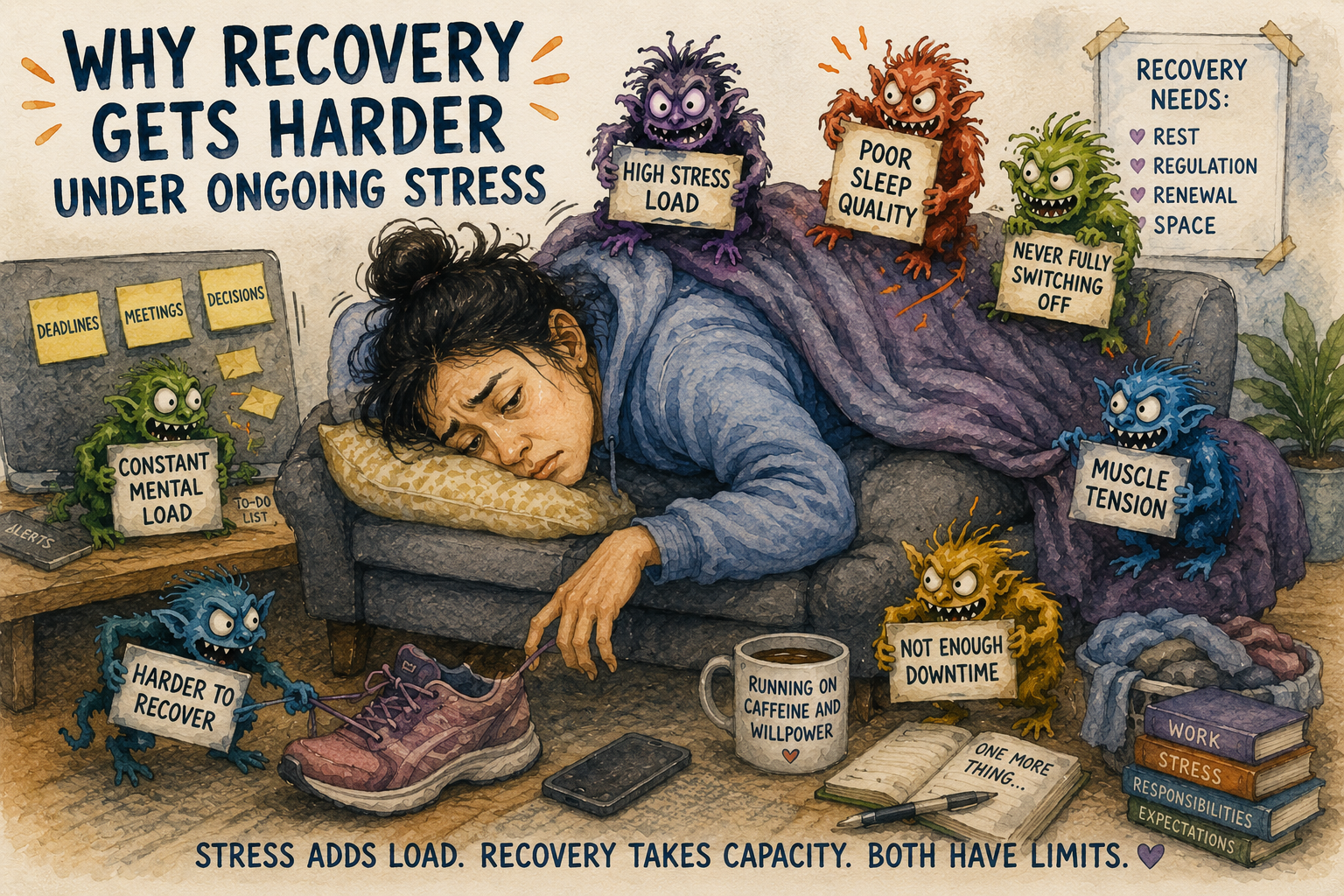
Sometimes the issue is not effort – but accumulated load.
Many people are exercising, stretching, sleeping reasonably well, and trying to take care of themselves.
Yet recovery still feels increasingly difficult.
The body remains:
- tight
- fatigued
- reactive
- uncomfortable
- unable to fully “switch off”
This is something we increasingly see in people balancing high physical and mental demand simultaneously.
Stress changes how the body recovers
When stress remains elevated over long periods, the nervous system often stays in a more heightened state.
This can influence:
- muscle tone
- breathing patterns
- pain sensitivity
- sleep quality
- recovery capacity overall
People often notice:
- soreness lasting longer
- increased stiffness
- more headaches or jaw tension
- greater fatigue after training
- feeling physically “wired”
Even positive activities like exercise can become harder to recover from if the nervous system never fully settles.
The role of “allostatic load”
One concept increasingly discussed in stress and recovery research is something known as allostatic load.
In simple terms, this refers to the cumulative effect of ongoing physical, mental, and emotional stress on the body over time.
When stress remains elevated for prolonged periods, the nervous system and body may gradually begin adapting to this higher state of demand.
People may notice:
- increased muscle tension
- poorer recovery
- disrupted sleep
- heightened pain sensitivity
- fatigue that does not fully resolve with rest
- feeling physically “wired” or unable to completely switch off
This does not mean the body is “broken,” but rather that it may be carrying a significant accumulated load without enough opportunity to fully regulate and recover.
This is one reason why many osteopathic and bodywork approaches look beyond isolated symptoms alone.
At Ithaca Wellness, treatment may draw from:
- manual osteopathy
- therapeutic bodywork
- elements of shiatsu
- breathing and nervous system-focused approaches
with the aim of helping support relaxation, movement, recovery, and overall regulation throughout the body.
Why high-performing people often overlook this
Many active or high-performing individuals are very good at pushing through.
They continue functioning well externally.
But internally, the system may be struggling to regulate ongoing load effectively.
This can gradually lead to:
- chronic tension
- persistent fatigue
- nervous system overload
- more reactive pain patterns
Recovery is not simply rest
Recovery is the body’s ability to shift out of a heightened state.
For many people, this becomes increasingly difficult under:
- ongoing work pressure
- constant stimulation
- irregular downtime
- excessive cognitive load
This is why some individuals feel tired — but never fully restored.
A more integrated approach
At Ithaca Wellness, treatment draws from:
- manual osteopathy
- therapeutic bodywork
- elements of shiatsu
The aim is to support regulation, recovery, and reduced tension throughout the body – not simply symptom management alone.
Begin with a consultation
If your headaches keep returning despite doing “all the right things,” it may be worth looking at the broader pattern involved.
👉 Book a consultation
👉 Or explore osteopathy in Coquitlam
FAQ
Can desk work really cause physical tension in the body?
Yes. Prolonged desk work can contribute to increased tension through the neck, shoulders, jaw, lower back, and hips — particularly when combined with ongoing mental stress and reduced movement throughout the day.
Why do I feel more tense after sitting at a desk all day?
Long periods of sitting and concentration often lead to reduced movement variability, shallow breathing, muscle guarding, and increased nervous system load. Over time, this can create accumulated physical tension and stiffness.
Why does stress seem to affect my body physically?
Stress has a direct effect on the nervous system and muscle tone. As stress levels rise, many people unconsciously tighten through the jaw, neck, shoulders, and upper body. Pain sensitivity and muscle tenderness can also increase during more stressful periods.
I exercise regularly — why do I still feel tight and tense?
Exercise is valuable, but it does not always fully offset prolonged stress, desk work, and nervous system overload. Many active people still experience recurring tension patterns when recovery and regulation are compromised.
Can desk work contribute to headaches and jaw tension?
Yes. Neck strain, jaw clenching, shoulder tension, and nervous system stress are commonly linked with desk-based work and prolonged concentration. These patterns may contribute to headaches, TMJ symptoms, and upper body discomfort.
Why do symptoms often feel worse later in the day?
Throughout the day the body accumulates physical and mental load. As fatigue and stress build, muscles often become tighter and more sensitive, making symptoms such as headaches, stiffness, and tension more noticeable by evening.
Are daytime appointments helpful for stress-related tension?
For many people, yes. Earlier daytime sessions can sometimes help interrupt tension patterns before they become more established later in the day. Many people also find daytime sessions quieter and more restorative overall.
What approach does Ithaca Wellness use?
Treatment at Ithaca Wellness draws from:
- manual osteopathy
- therapeutic bodywork
- elements of shiatsu
The aim is to better understand the broader tension and stress patterns affecting the body — not simply chase symptoms temporarily.
Member of British Columbia Association of Osteopathic Manual Practitioners (BCAOMP) – Fully insured and licensed.
To book appointments use the booking links below:
Mobile & Online Appointments https://ithaca.noterro.com
@ Dovira Clinic, Coquitlam https://dovira.janeapp.com/
Follow us @ Facebook & Instagram & Threads !
Write us a Google Review and get $10 OFF your next treatment!
Providing manual osteopathy and therapeutic bodywork to the communities of Coquitlam, Anmore, Belcarra, Port Moody, Burke Mountain, Westwood Plateau, Tri-Cities, and Greater Vancouver!
Professional osteopathic care – in-clinic appointments and home visits!
Leave a Reply