
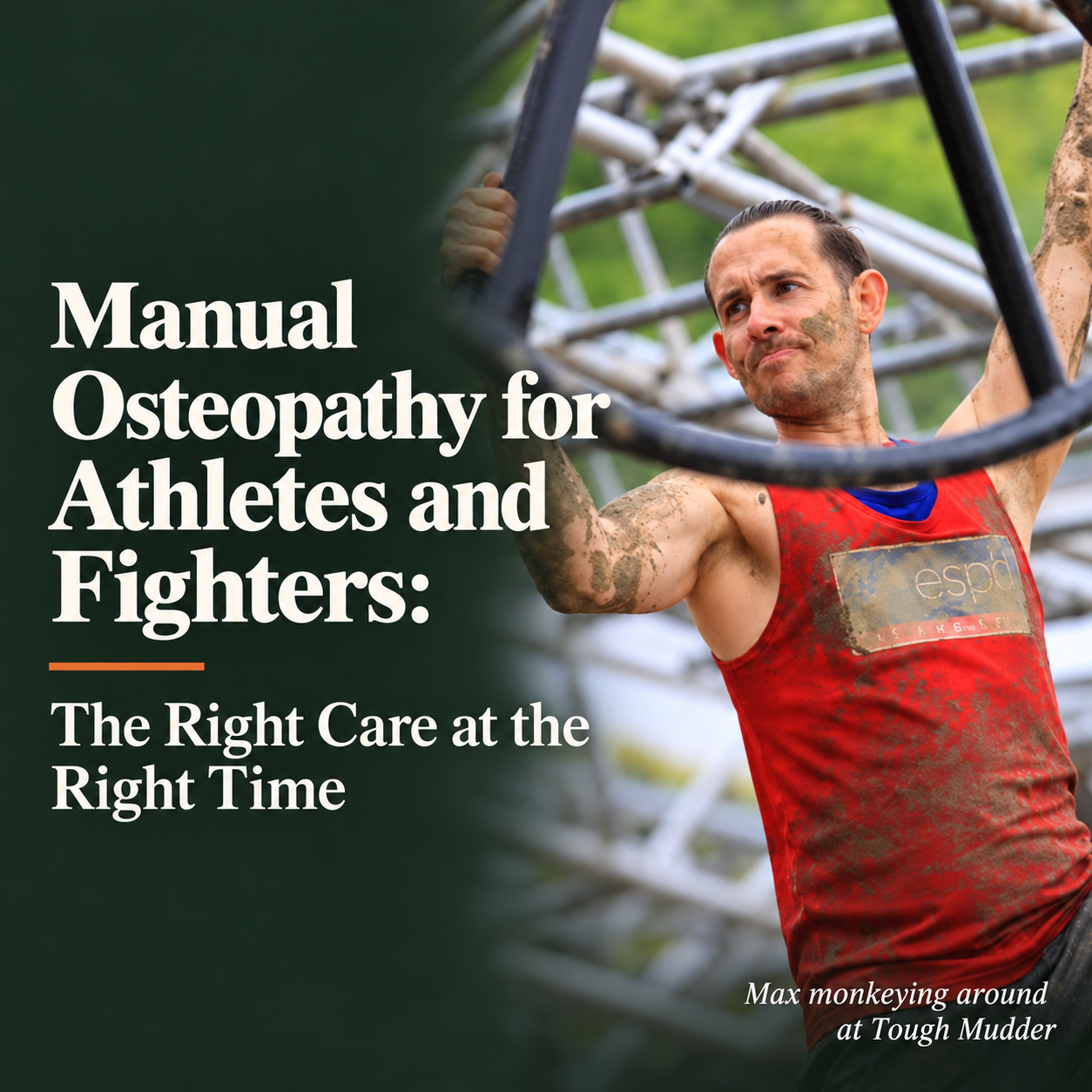
By Max Edwards, Osteopathic Manual Practitioner & Bodywork Specialist
Athletes ask a great deal of their bodies. Whether lifting, running, grappling or preparing for an MMA fight, they continually negotiate the relationship between training demands and their capacity to recover.
For practitioners, this creates an important question: what does this particular athlete need from us at this particular moment?
A fighter building capacity between bouts has different needs from someone approaching weigh-in, managing discomfort during a demanding training camp or recovering after competition. The same applies to a recreational athlete preparing for a HYROX or Tough Mudder event or a runner returning after injury. Appropriate care depends on the person, their presentation and their schedule.
Often, I work with gym-goers, athletes and martial artists, including MMA fighters and fighters competing in the UFC. My approach draws on manual osteopathic principles while recognising that effective athlete care requires clear boundaries, realistic expectations and collaboration.
This work is personal to me, too. I spent nearly 20 years as a personal trainer and group exercise teacher, competed in karate, and have enjoyed decades of physical training, from marathons and Tough Mudder to circuits, hiking and yoga. I understand the enthusiasm that drives people to train – and the frustration when their body cannot comfortably meet their ambitions.
And there is a strange paradox I have to accept as somebody whose purpose is to help people feel less pain, less stress and to improve their health, while at the same time a client is enthusiastically informing me that they are training as hard as possible for an upcoming bout where they will likely be punched and kicked multiple times. I must drop my judgements at the clinic door and objectively focus only on how I can support them as effectively as possible.
Here is how I approach this demographic.
A whole-person assessment
The osteopathic emphasis on the relationship between structure and function provides a useful starting point. An athlete’s painful shoulder deserves local assessment, alongside consideration of the drivers, movements, workloads and circumstances surrounding it.
For a fighter, that might include punching volume, grappling positions, strength sessions, recent impacts, previous injuries and sleep. For a lifter, it may involve changes in training volume, exercise selection or recovery between sessions.
This broader perspective should encourage curiosity rather than certainty about a single “root cause”. As we manual osteopaths know, movement asymmetry is not automatically a dysfunction, and tenderness or restricted movement does not, by itself, establish why someone is in pain.
I want to understand what provokes the symptoms, what the athlete can currently tolerate, what has recently changed, and whether the presentation is appropriate for manual care.
Treatment may include soft-tissue techniques, gentle joint articulation, muscle energy techniques and comfortable positional approaches, selected according to assessment, consent and individual tolerance. The practical aims are to ease symptoms, support comfortable movement and help the athlete participate in an appropriate active recovery or rehabilitation plan.
Between competitions: time to assess and build
Periods between events offer an opportunity to explore recurring symptoms without the immediate pressure of competition.
Assessment can focus on relevant tasks: squatting, reaching overhead, rotating, adopting a fighting stance or moving through a comfortable kicking range. Where appropriate, manual treatment can be followed by reassessment of the same task. Has movement become more comfortable? Has the athlete gained a useful range after MET? Does the change persist beyond the appointment?
For example, an athlete with ankle stiffness during a squat may benefit from tolerable ankle articulation and calf soft-tissue work, alongside suitable mobility and strengthening exercises. The purpose is to establish whether treatment offers a useful contribution to their training.
Lasting capacity still requires progressive loading and practice. Exercise guidance should remain within the practitioner’s competence and fit with the work of the athlete’s physiotherapist or strength and conditioning coach. Collaborative working with the athlete, their coach and any other physical therapists who support them is the best approach and a fantastic way not only to get to know the client in greater detail but to learn about different disciplines.
During training camp: care that fits the workload
A fight camp may combine technical drills, sparring, wrestling, conditioning and strength work. The practitioner needs to know where treatment sits within that week.
An athlete arriving after hard sparring may need a different assessment and treatment dose from one attending before a demanding session. More pressure is not automatically more effective, particularly when tissues are already irritable. Some MMA fighters are reluctant to calm their nervous system too much pre-fight or have connective tissue too relaxed until they have fought. That tension gives them their edge until it is time to peak.
Depending on the findings, care might involve gentle shoulder articulation for uncomfortable reaching, soft-tissue work around overloaded forearms, or comfortable thoracic and hip movement. These are possible approaches to assessed musculoskeletal symptoms, rather than standard protocols for every fighter. The goal at this point in their training schedule might only be mobility and circulatory massage.
I also ask about the response later that day and during the next training session. Treatment should earn its place in the athlete’s schedule through meaningful benefits and acceptable after-effects. Athletes are likely already aching, so we don’t want to add to those aches.
Persistent fatigue, deteriorating performance or recurrent injuries warrant a wider conversation. Low energy availability can affect health and performance in athletes of all types. Suspected relative energy deficiency in sport requires appropriate medical and nutritional assessment; manual treatment cannot correct inadequate fuelling. Again, collaborating with the athlete’s wider support team is crucial.
Approaching competition: keep care familiar and proportionate
As competition approaches, my priority is a predictable response.
Where treatment is appropriate, I favour familiar, well-tolerated approaches with a clear purpose: easing a known area of discomfort or supporting comfortable movement. I avoid introducing aggressive techniques or chasing large changes in range immediately before an event.
A useful clinical question is: will this intervention help the athlete feel ready or add another demand to an already demanding week?
I am particularly cautious with those clients who are weight cutting. Manual care has no role in making dehydration safe or compensating for its physiological effects. An athlete who is faint, confused or otherwise unwell during a cut needs medical assessment, with urgent escalation where indicated. I always suggest a referral to a qualified medical and sports-nutrition professional.
After a fight: assessment before treatment
Post-fight care begins with the mechanism of injury and the possibility of significant trauma.
A sore neck after grappling, for example, requires a different level of concern when accompanied by head impact, severe midline pain, neurological symptoms or altered awareness. Suspected fracture, dislocation, major soft-tissue injury or internal injury requires medical assessment before treatment of the affected region. I personally never treat an individual with an injury without written approval from their family doctor.
When I suspect a concussion, I recommend stopping contact activity and arranging appropriate medical evaluation, and I never treat this prior to medical screening and a doctor’s go-ahead. And combat-sport concussion guidance calls for particular caution because head contact is intrinsic to the sport. So here I tread very carefully.
Once significant injury has been assessed and a management plan established, manual care may contribute to comfort and movement within that plan. Direct deep pressure, forceful stretching or mobilisation over acutely injured, markedly swollen or unstable tissues is obviously inappropriate, so the gentle approach we manual osteopaths are trained for can be very helpful in these cases.
Sometimes an athlete, particularly a fighter, will tell me that they are “feeling better” after treatment, but I rarely take that as evidence that they are ready to spar or compete – I always recommend that they have regular medical check-ups before going back into training or the ring.
Recovery, communication and professional boundaries
Athletes sometimes value the treatment session as an opportunity to slow down, discuss symptoms and feel supported. Gentle hands-on care and comfortable breathing awareness may help some people feel more settled, particularly if they are post-fight and in the recovery cycle of training. I describe that experience without claiming to “reset” the nervous system, correct hormonal disturbance or accelerate tissue healing. I have found that the first and best treatment goal in these instances is relaxation. Their body, mind, emotions, nervous system and more have taken the proverbial “battering” and any support for them to wind down is beneficial. After that happens, and if their needs are within the scope of manual osteopathy, I will help support the aches and pains.
With the athlete’s permission, I find that through communication with their physician, physiotherapist and coaching team, we can really help align our treatment with their wider health plan. This systemic approach can help support them with improved tolerance of everyday movement, better participation in prescribed exercise and a clearer understanding of when to seek further assessment.
My enthusiasm for working with active people comes from my own experiences over a very physically active life and I share their passion for movement. I can empathise with that desire to keep progressing performance while facing the reality and limits of our human body. I think our contribution as manual osteopathic practitioners is strongest when careful assessment, proportionate treatment and honest communication support their ambitions.
Sometimes that means hands-on care. Sometimes it means adjusting the plan, recommending another professional or recognising that the athlete needs time out.
Knowing which response is appropriate – and when – is central to good athlete care. And I’m a passionate advocate of manual osteopathy having a lot to offer this community.
Max Edwards is an Osteopathic Manual Practitioner & Bodywork Specialist, owner of Ithaca Wellness in Coquitlam, and a member of BCAOMP. He works with active adults, athletes and combat-sport competitors through in-clinic and mobile appointments.
Begin With A Consultation
If you are experiencing any physical activity-related back pain, shoulder pain, pelvic discomfort, rib tension, headaches, postural strain and more is affecting your comfort and wellbeing, it may be worth exploring the broader factors involved.
Sometimes understanding how the body is adapting is the first step toward feeling more comfortable.
MAX’S LOCATIONS FOR MANUAL OSTEOPATHY & THERAPEUTIC BODYWORK
COQUITLAM – PORT MOODY – TRI-CITIES
ITHACA WELLNESS CLINIC COQUITLAM
OR
MOBILE CONCIERGE SERVICE
OR
ONLINE VIRTUAL SESSIONS
back pain relief Coquitlam natural pain relief Coquitlam stress reduction coquitlam
Leave a Reply