
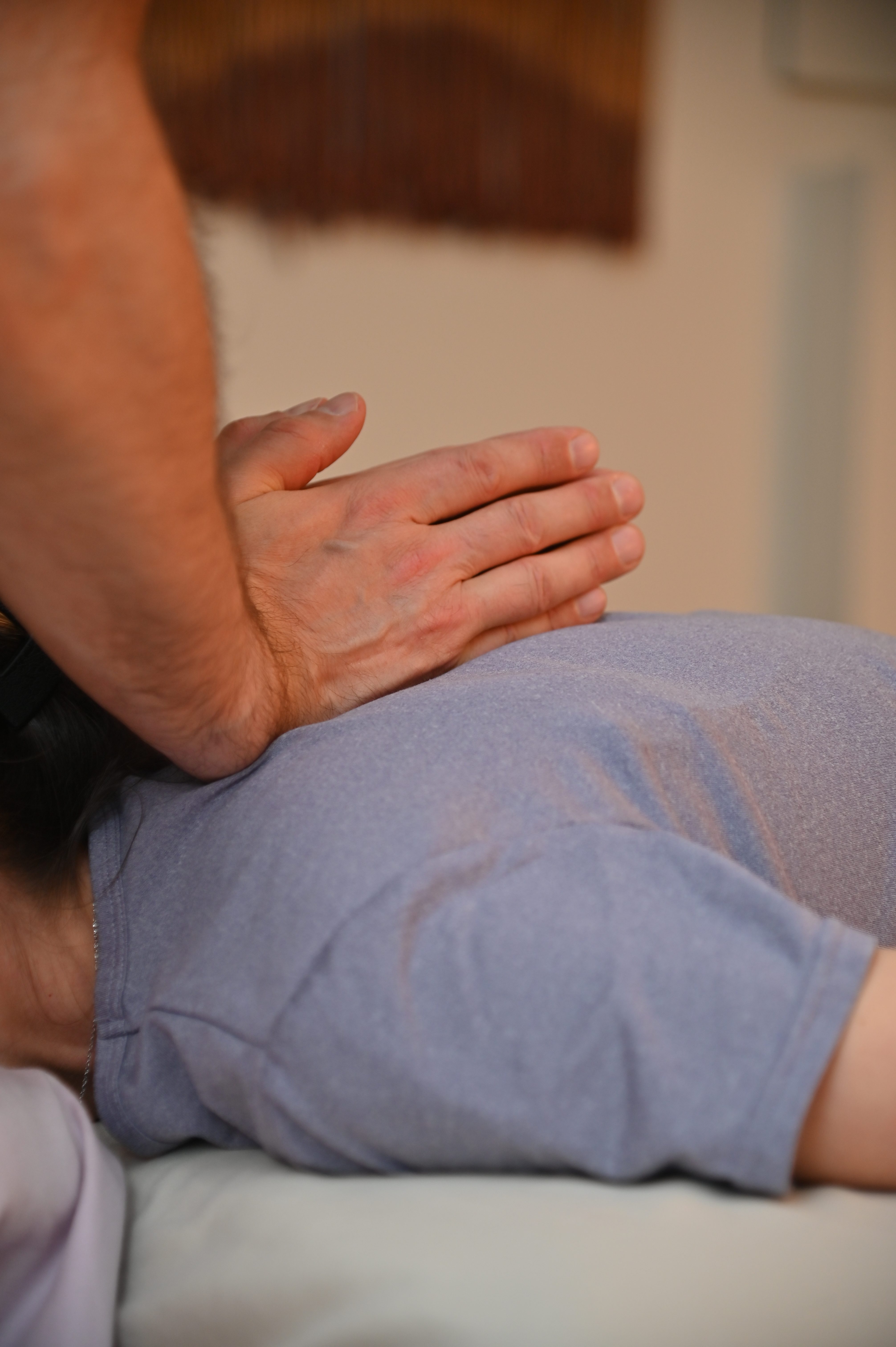
Osteopathy is increasingly explored within a biopsychosocial and integrative healthcare framework. This short article explores the scientific and clinical context for the positive impact of manual therapy, particularly manual osteopathy & bodywork therapy, on nervous system regulation and whole-person approaches in mental health care.
Introduction
Anxiety and depressive disorders represent a significant and growing global health burden, affecting emotional well-being, cognitive function, and overall quality of life. While conventional management strategies – such as psychotherapy and pharmacological interventions – remain central to care, there is increasing interest in complementary and integrative approaches that address both physical and psychological dimensions of health. Osteopathy, a system of manual therapy healthcare traditionally associated with musculoskeletal dysfunction, has been proposed as a supportive modality in the management of anxiety and depression. Supporting the theoretical basis, there are more proposed physiological mechanisms, and growing evidence for the positive role of osteopathy in mental health care.
Principles of Osteopathy
Osteopathy is a form of manual, non-invasive healthcare grounded in the principles of structural–functional interrelationship, self-regulation, co-regulation, and whole-person care. Osteopathic practitioners assess and treat dysfunctions of the musculoskeletal system – including joints, muscles, fascia, and connective tissues – with the aim of optimizing physiological function. Treatment approaches are designed to influence not only mechanical factors, but also neurological, circulatory, lymphatic, organs and autonomic processes that contribute to overall health and resilience.
The Biopsychosocial Connection Between Osteopathy and Mental Health
Anxiety and depression are increasingly understood through a biopsychosocial framework, in which psychological distress is closely linked with neurophysiological, endocrine, and musculoskeletal changes. Individuals with anxiety or depressive disorders commonly present with somatic symptoms such as persistent muscle tension, headaches, fatigue, sleep disturbances, altered breathing patterns and digestive problems. Chronic stress has been shown to dysregulate the autonomic nervous system, often resulting in sustained sympathetic activation and reduced parasympathetic tone.
Osteopathic interventions may influence this mind–body interaction by addressing physical manifestations of stress and supporting autonomic regulation. Gentle manual techniques aimed at reducing tissue tension, improving joint mobility, and normalizing breathing mechanics may contribute to downregulation of the stress response and enhanced interoceptive awareness.
Proposed Mechanisms of Action
Several physiological mechanisms have been proposed to explain how osteopathy may support mental health:
- Autonomic Nervous System Modulation: Manual therapies may promote parasympathetic activity, which is associated with relaxation, emotional regulation, and stress recovery.
- Reduction of Somatic Tension: Alleviating chronic muscular and fascial tension may reduce nociceptive (pain) input to the central nervous system, which has been linked to mood disturbances.
- Improved Circulation and Lymphatic Flow: Enhanced blood and lymphatic circulation may support metabolic waste removal, tissue oxygenation and improve endorphin release, contributing to overall physiological balance.
- Sleep and Breathing Regulation: By improving thoracic mobility and reducing tension, osteopathic treatment may positively influence sleep quality and respiratory patterns – both critical factors in mental health.
Clinical Outcomes and Emerging Evidence
While large-scale randomized controlled trials remain limited, smaller studies, observational data, and patient-reported outcomes suggest that osteopathic care may lead to improvements in perceived stress, emotional well-being, and quality of life. Patients frequently report feelings of relaxation, improved body awareness, and enhanced emotional regulation following treatment. These effects are particularly relevant when osteopathy is used alongside established mental health interventions.
It is important to note that current evidence supports osteopathy as a supportive and adjunctive therapy, rather than a standalone treatment for anxiety or depressive disorders.
Integrating Osteopathy into Mental Health Care
Osteopathy may be most effective when incorporated into a multidisciplinary treatment plan that includes psychological therapy, medical management where appropriate, and lifestyle interventions such as exercise, sleep hygiene, and stress management. Collaborative communication between osteopaths, primary care providers, and mental health professionals is essential to ensure safe, individualized, and ethical care.
Patients considering osteopathic treatment for mental health concerns should be appropriately screened and referred when symptoms are severe, worsening, or associated with risk factors such as suicidal ideation.
Conclusion
The growing recognition of the interconnectedness between physical and mental health highlights the potential value of integrative approaches such as osteopathy. By addressing somatic contributors to stress and supporting autonomic balance, osteopathy may play a meaningful complementary role in the management of anxiety and depression. While further high-quality research is needed to clarify mechanisms and efficacy, current evidence and clinical experience suggest that osteopathy can contribute positively to a holistic mental health strategy.
References & Further Reading
(Osteopathy, Manual Therapy, and Mental Health)
1. Biopsychosocial Models of Mental Health
These provide the conceptual foundation for integrating body-based therapies into mental health care.
- Engel, G. L. (1977). The need for a new medical model: A challenge for biomedicine. Science, 196(4286), 129–136.
Seminal paper underpinning whole-person and integrative healthcare approaches. - Borrell-Carrió, F., Suchman, A. L., & Epstein, R. M. (2004). The biopsychosocial model 25 years later: Principles, practice, and scientific inquiry. Annals of Family Medicine, 2(6), 576–582.
2. Manual Therapy and the Nervous System
These explore how touch and manual interventions may influence autonomic regulation and stress responses.
- McGlone, F., Wessberg, J., & Olausson, H. (2014). Discriminative and affective touch: Sensing and feeling. Neuron, 82(4), 737–755.
Explores neurophysiological pathways involved in affective touch and emotional regulation. - Field, T. (2014). Massage therapy research review. Complementary Therapies in Clinical Practice, 20(4), 224–229.
Evidence for reductions in anxiety, depression, and cortisol following manual therapies. - Porges, S. W. (2011). The Polyvagal Theory: Neurophysiological Foundations of Emotions, Attachment, Communication, and Self-Regulation. New York: W.W. Norton & Company.
Frequently cited framework for understanding autonomic regulation and mental health.
3. Osteopathy, Somatic Dysfunction, and Mental Health
More directly relevant to osteopathic practice.
- D’Alessandro, G., Cerritelli, F., & Cortelli, P. (2016). Osteopathic manipulative treatment and autonomic nervous system: A systematic review. Journal of Bodywork and Movement Therapies, 20(1), 165–174.
- Franke, H., Fryer, G., Ostelo, R. W., & Kamper, S. J. (2014). Musculoskeletal pain and depression: A systematic review. Pain, 155(1), 3–15.
Highlights the bidirectional relationship between pain, somatic dysfunction, and depression. - Licciardone, J. C., Gatchel, R. J., & Aryal, S. (2016). Recovery from chronic low back pain and depression with osteopathic manipulative treatment. Journal of the American Osteopathic Association, 116(2), 100–113.
4. Anxiety, Depression, and Somatic Symptoms
Useful for explaining why physical treatment can be relevant in psychological distress.
- Kroenke, K. (2003). Patients presenting with somatic complaints: Epidemiology, psychiatric comorbidity and management. International Journal of Methods in Psychiatric Research, 12(1), 34–43.
- Van der Kolk, B. (2014). The Body Keeps the Score: Brain, Mind, and Body in the Healing of Trauma. New York: Viking.
Widely referenced for understanding how trauma and emotional stress manifest physically.
5. Sleep, Stress, and Manual Therapy
Supporting evidence for secondary benefits relevant to mental health.
- Morin, C. M., & Benca, R. (2012). Chronic insomnia. The Lancet, 379(9821), 1129–1141.
- Moyer, C. A., Rounds, J., & Hannum, J. W. (2004). A meta-analysis of massage therapy research. Psychological Bulletin, 130(1), 3–18.
6. Professional and Educational Osteopathic Sources
Good for regulatory-safe and profession-specific framing.
- World Health Organization (WHO). (2010). Benchmarks for training in osteopathy.
- British Osteopathic Association / General Osteopathic Council publications on whole-person care and patient-centred practice.
- American Osteopathic Association (AOA). Osteopathic principles and practice educational resources.
If you live in any of the Tri-Cities neighbourhoods of Port Moody, Coquitlam, Anmore, Belcarra, Burke Mountain, Westwood Plateau and Greater Vancouver, and have been struggling with mental health issues such as anxiety, depression and stress, also suffering from chronic physical pain, I’m here to provide support and relief in the comfort of your own home. It might be chronic pain, an injury, bad posture or an over-stressed nervous system that you are dealing with. You are not alone or isolated. I am on-call and ready with manual osteopathy and therapeutic bodywork expertise and can be providing physical therapy to you in your home, within the hour! As a resident of Coquitlam, I am proud to be able to bring great health services to my neighbours in this wide community.
Max’s Locations
Monday – 10am to 8pm @ Mobile in-house/at-work service Tri-Cities and Greater Vancouver – Book here: https://ithaca.noterro.com
Tuesday – 2pm to 8pm @ Dovira Care Integrative Health Clinic, 3020 Lincoln Ave, 109, Coquitlam, BC, V3B 6B4 – Book here: https://dovira.janeapp.com
Saturday – 10am to 8pm @ Dovira Care Integrative Health Clinic, 3020 Lincoln Ave, 109, Coquitlam, BC, V3B 6B4 – Book here: https://dovira.janeapp.com
Sunday – 11am to 5pm @ Mobile in-house/at-work service Tri-Cities and Greater Vancouver – Book here: https://ithaca.noterro.com
If you have any questions about bookings or Manual Osteopathy & Therapeutic Bodywork please email Max at ithacawellnesscanada@gmail.com or call 778-929-6143
We would like to respectfully acknowledge that Ithaca Wellness operates on the traditional, ancestral, and unceded shared territories of the kʷikʷəƛ̓əm (Kwikwetlem), sq̓əc̓iy̓aɁɬ təməxʷ (Katzie), səlilwətaɬ (Tsleil-Waututh), xʷməθkʷəy̓əm (Musqueam), Sḵwx̱wú7mesh (Squamish), and Stó:lō (Sto:lo) First Nations. We give thanks to these nations who continue to live on and care for these lands and waters, and for their wisdom towards wildlife.
Leave a Reply