Most people don’t notice their breathing changing until their body starts reacting to it.
The body has an extraordinary ability to adapt to stress.
But over time, stress often changes:
- how we breathe
- how we hold tension
- how the nervous system regulates
- and even how the body moves and recovers overall
This is something increasingly common in:
- professionals under ongoing pressure
- remote workers
- active people balancing high physical and mental load
- people experiencing persistent tension patterns
For many individuals, breathing becomes less natural, less relaxed, and more restricted without them fully realising it.
Breathing is closely connected to the nervous system
Breathing is not simply about oxygen.
It is deeply connected to:
- stress regulation
- muscle tension
- posture and movement
- rib and spinal mobility
- nervous system state
When the body is under ongoing stress, breathing often becomes:
- shallower
- faster
- more upper-chest dominant
- less diaphragmatic
Over time, this can contribute to:
- neck and shoulder tension
- jaw clenching
- headaches
- rib and upper back tightness
- increased fatigue
- reduced recovery capacity
Many people begin to feel physically “held” or “braced” without fully understanding why.
The body works as an interconnected system
One of the key principles within osteopathic approaches is that the body functions as an integrated whole.
This means that tension or restriction in one area can influence how other parts of the body adapt and compensate.
For example:
- reduced rib or thoracic mobility may affect breathing patterns
- tension through the neck and upper chest may influence nerves and circulation into the arms
- pelvic or SI joint imbalance can alter spinal mechanics and overall tension distribution
- ongoing stress patterns may increase muscular guarding throughout the body
In some individuals, this can contribute to patterns involving:
- tightness
- fatigue
- altered movement
- nervous system sensitivity
- feelings of restriction or compression
This does not necessarily mean there is one single “cause” for symptoms, but rather that multiple systems may be influencing each other simultaneously.
Why stress often creates upper-body tension patterns
Under stress, the body commonly shifts into a more protective or guarded state.
People often unconsciously begin to:
- elevate the shoulders
- tighten through the neck
- brace through the ribcage
- clench the jaw
- reduce natural movement variability
Over time, this can reduce mobility through areas such as:
- the ribcage
- thoracic spine
- diaphragm
- neck and upper chest
This is one reason why many people experiencing stress also notice:
- shallow breathing
- upper back tightness
- headaches
- chest tightness
- tension around the head, neck, jaw and shoulders
Why anxiety often becomes physical
Anxiety is not only experienced mentally.
For many people, it also creates very real physical changes throughout the body.
People commonly notice:
- shallow or restricted breathing
- chest tightness
- jaw clenching
- increased muscle tension
- digestive discomfort
- feeling physically “wired”
- dizziness and loss of balance
- difficulty fully relaxing even during rest
- heart palpitations and light-headedness like vertigo
Over time, the nervous system can begin to remain in a more heightened or protective state.
This can influence:
- breathing patterns
- pain sensitivity
- muscle tension
- recovery capacity
- overall feelings of physical ease in the body
Many people experiencing ongoing stress or anxiety patterns describe feeling as though their body never fully “switches off.”
This is one reason why approaches that support relaxation, breathing awareness, nervous system regulation, movement, and whole-body tension patterns may sometimes be helpful as part of a broader wellbeing approach.
The role of circulation, nerves, and body mechanics
The body relies on healthy movement and mobility for many systems to function comfortably together.
When areas become persistently tight or restricted, people may sometimes experience:
- feelings of compression or tension
- altered movement patterns
- sensitivity around nerves or surrounding tissues
- changes in circulation or fluid movement
- heaviness, tingling, or fatigue in certain regions
- an increase in illnesses like flu and colds and bugs
For example, tension patterns around the neck, upper chest, and shoulders may contribute to symptoms associated with thoracic outlet-type patterns in some individuals.
Similarly, reduced mobility through the spine, pelvis, or ribcage may influence how strain and tension are distributed throughout the body and restrict circulation and immune system function.
This is why many osteopathic approaches look beyond isolated symptoms alone.
A broader and more integrated approach
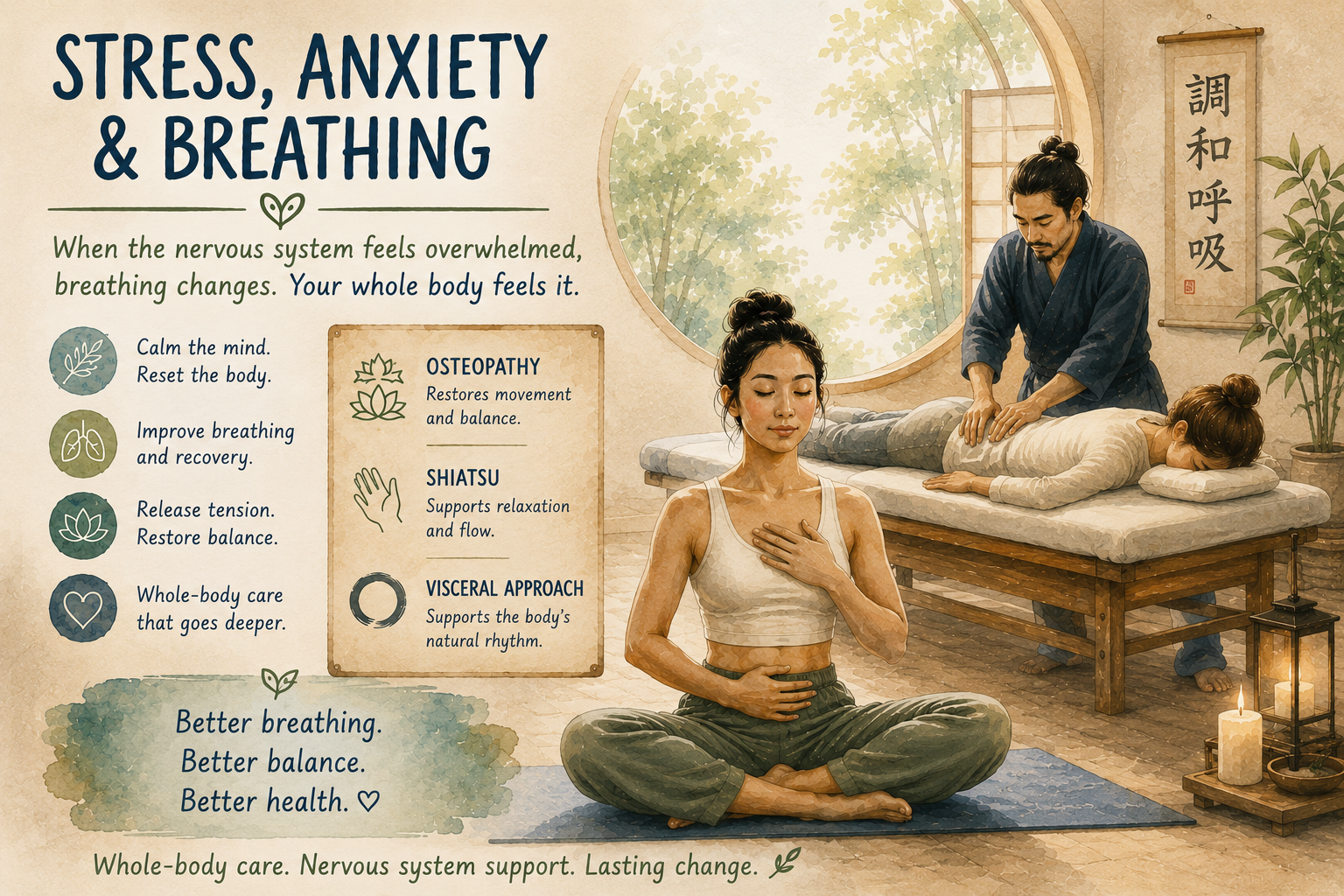
At Ithaca Wellness, treatment draws from:
- manual osteopathy
- therapeutic bodywork
- elements of shiatsu
- gentle nervous system-focused approaches
- movement and breathing awareness
- and, where appropriate, visceral and whole-body osteopathic techniques
The aim is not simply to chase symptoms temporarily, but to better understand the broader patterns contributing to tension, stress, breathing restriction, and recovery challenges.
Why active and high-performing people often miss this
Many active people continue functioning at a high level despite increasing tension patterns.
They may:
- train consistently
- stretch regularly
- remain productive professionally
while simultaneously experiencing:
- ongoing tightness
- shallow breathing
- headaches
- jaw tension
- reduced recovery
- difficulty fully relaxing
Often the body has adapted to stress so gradually that these patterns simply begin to feel “normal.”
Signs your breathing and nervous system may be under strain
You may notice:
- frequent upper chest breathing
- difficulty taking a deep relaxed breath
- tension around the neck or ribs
- jaw clenching
- headaches or upper back tightness
- fatigue despite rest
- feeling physically “wired”
- difficulty fully switching off
A more personalised approach to recovery
For more persistent patterns, a more individual and integrated approach is often helpful.
Private osteopathy sessions allow for:
- longer, more focused treatment
- greater continuity
- a more detailed understanding of whole-body tension patterns
- a quieter and more restorative treatment experience
Mobile and in-home sessions are also available for those preferring a more discreet and convenient option.
👉 Learn more here:
Private Mobile Concierge Osteopathy & Personalised Care
Begin with a consultation
If stress, tension, breathing restriction, or ongoing fatigue patterns are beginning to affect how your body feels day-to-day, it may be worth exploring the broader systems involved.
👉 Book a consultation
👉 Or explore osteopathy in Coquitlam
FAQ
Can stress and anxiety really affect breathing?
Yes. Stress and anxiety commonly influence breathing patterns. Many people begin breathing more shallowly, rapidly, or through the upper chest when the nervous system is under ongoing stress.
Why do I feel tight in my chest, neck, or shoulders when stressed?
Under stress, the body often shifts into a more protective or guarded state. This can increase muscle tension through the neck, shoulders, ribcage, jaw, and upper back, sometimes affecting how comfortably the body moves and breathes.
Can breathing patterns affect muscle tension and recovery?
They can. Restricted or shallow breathing patterns may contribute to increased tension, reduced relaxation, fatigue, and feelings of physical tightness throughout the body.
What is meant by a “whole-body approach”?
A whole-body osteopathic approach looks at how different systems may influence each other – including posture, movement, breathing, stress patterns, nervous system regulation, circulation, and overall body mechanics.
Can spinal, rib, or pelvic tension affect the rest of the body?
In some people, restrictions or tension through areas such as the ribcage, thoracic spine, pelvis, or SI joints may influence how strain and compensation patterns are distributed throughout the body.
What is visceral osteopathy?
Visceral osteopathy is a gentle osteopathic approach that considers the movement and mobility of the body’s internal tissues and surrounding structures as part of overall body mechanics and tension patterns.
Can ongoing stress affect recovery even if I exercise regularly?
Yes. Many active people still experience persistent tension, fatigue, headaches, or reduced recovery capacity when the nervous system remains under prolonged stress or stimulation.
What types of treatment does Ithaca Wellness use?
Treatment may draw from:
- manual osteopathy
- therapeutic bodywork
- shiatsu-inspired techniques
- gentle nervous system-focused approaches
- breathing and movement awareness
- whole-body and visceral osteopathic approaches where appropriate
The aim is to better understand broader tension and stress patterns rather than focusing on isolated symptoms alone.
Member of British Columbia Association of Osteopathic Manual Practitioners (BCAOMP) – Fully insured and licensed.
To book appointments use the booking links below:
Mobile & Online Appointments https://ithaca.noterro.com
@ Dovira Clinic, Coquitlam https://dovira.janeapp.com/
Follow us @ Facebook & Instagram & Threads !
Write us a Google Review and get $10 OFF your next treatment!
Providing manual osteopathy and therapeutic bodywork to the communities of Coquitlam, Anmore, Belcarra, Port Moody, Burke Mountain, Westwood Plateau, Tri-Cities, and Greater Vancouver!
Professional osteopathic care – in-clinic appointments and home visits!