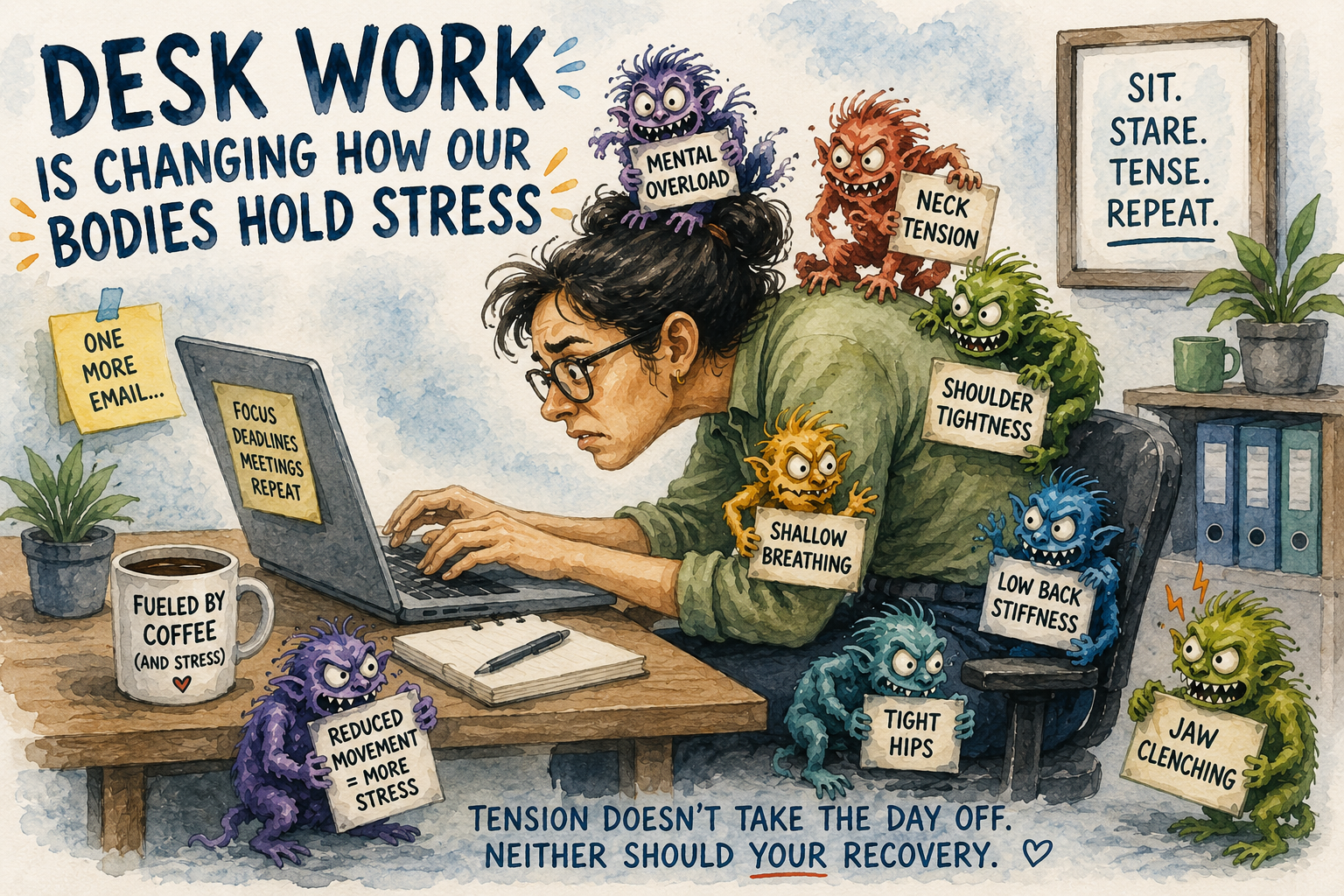
Modern stress is often physical – even when we barely move.
Many people assume physical tension comes mainly from heavy activity or poor posture.
But increasingly, some of the most significant tension patterns we see are developing in people who spend long hours:
- sitting at desks
- working on computers
- concentrating intensely
- remaining mentally “switched on” throughout the day
Even without obvious physical strain, the body gradually adapts to these conditions.
Over time, this can change how the body holds stress altogether.
Stress is not only mental
Stress has a direct physical effect on the body.
As workload, concentration, and nervous system demand increase, many people unconsciously begin to:
- tighten through the jaw
- raise the shoulders
- brace through the neck
- reduce breathing variability
- move less frequently and less naturally
This often happens gradually and below conscious awareness.
The result is not just mental fatigue – but accumulated physical tension throughout the system.
Why desk work creates “held” patterns in the body
The body is designed for variation and movement.
But modern desk-based work often involves:
- prolonged static positioning
- repetitive hand and arm use
- sustained visual focus
- constant cognitive stimulation
Over time, the nervous system adapts to this environment.
Many people begin to feel:
- physically “held”
- unable to fully relax
- tighter through the upper body
- more reactive to stress
- stiff even after exercise or stretching
This is one reason why tension patterns can persist despite otherwise healthy lifestyles.
Exercise alone does not always offset nervous system load
Many active people are surprised to find they still experience:
- neck tension
- headaches
- jaw clenching
- persistent tightness
despite training regularly.
Exercise is valuable – but when the nervous system remains under continuous load, recovery becomes more difficult.
The body may remain in a more guarded, heightened state overall.
Why symptoms often build later in the day
As the day progresses, many people notice:
- increased stiffness
- more physical discomfort
- greater tenderness
- increased fatigue
- more noticeable pain patterns
One of the clearest patterns we often observe clinically is:
as stress and nervous system demand increase throughout the day, physical tension and sensitivity frequently increase alongside them.
This is not weakness.
It is often the body attempting to adapt to sustained load.
A more integrated approach to stress patterns
At Ithaca Wellness, treatment draws from:
- manual osteopathy
- elements of shiatsu
- therapeutic bodywork
The aim is not simply to reduce tension temporarily, but to better understand how stress is being physically expressed throughout the body.
Daytime treatment can sometimes be more beneficial
Many people wait until the end of the day to address tension.
But for some individuals, earlier treatment during quieter daytime hours can help interrupt these patterns before they become more established.
This is often particularly helpful for:
- remote workers
- professionals with flexible schedules
- retirees
- people experiencing ongoing stress-related tension
FAQ
Can desk work really cause physical tension in the body?
Yes. Prolonged desk work can contribute to increased tension through the neck, shoulders, jaw, lower back, and hips – particularly when combined with ongoing mental stress and reduced movement throughout the day.
Why do I feel more tense after sitting at a desk all day?
Long periods of sitting and concentration often lead to reduced movement variability, shallow breathing, muscle guarding, and increased nervous system load. Over time, this can create accumulated physical tension and stiffness.
Why does stress seem to affect my body physically?
Stress has a direct effect on the nervous system and muscle tone. As stress levels rise, many people unconsciously tighten through the jaw, neck, shoulders, and upper body. Pain sensitivity and muscle tenderness can also increase during more stressful periods.
I exercise regularly – why do I still feel tight and tense?
Exercise is valuable, but it does not always fully offset prolonged stress, desk work, and nervous system overload. Many active people still experience recurring tension patterns when recovery and regulation are compromised.
Can desk work contribute to headaches and jaw tension?
Yes. Neck strain, jaw clenching, shoulder tension, and nervous system stress are commonly linked with desk-based work and prolonged concentration. These patterns may contribute to headaches, TMJ symptoms, and upper body discomfort.
Why do symptoms often feel worse later in the day?
Throughout the day the body accumulates physical and mental load. As fatigue and stress build, muscles often become tighter and more sensitive, making symptoms such as headaches, stiffness, and tension more noticeable by evening.
Are daytime appointments helpful for stress-related tension?
For many people, yes. Earlier daytime sessions can sometimes help interrupt tension patterns before they become more established later in the day. Many people also find daytime sessions quieter and more restorative overall.
What approach does Ithaca Wellness use?
Treatment at Ithaca Wellness draws from:
- manual osteopathy
- therapeutic bodywork
- elements of shiatsu
The aim is to better understand the broader tension and stress patterns affecting the body – not simply chase symptoms temporarily.
Begin with a consultation
If your headaches keep returning despite doing “all the right things,” it may be worth looking at the broader pattern involved.
👉 Book a consultation
👉 Or explore osteopathy in Coquitlam
Member of British Columbia Association of Osteopathic Manual Practitioners (BCAOMP) – Fully insured and licensed.
To book appointments use the booking links below:
Mobile & Online Appointments https://ithaca.noterro.com
@ Dovira Clinic, Coquitlam https://dovira.janeapp.com/
Follow us @ Facebook & Instagram & Threads !
Write us a Google Review and get $10 OFF your next treatment!
Providing manual osteopathy and therapeutic bodywork to the communities of Coquitlam, Anmore, Belcarra, Port Moody, Burke Mountain, Westwood Plateau, Tri-Cities, and Greater Vancouver!
Professional osteopathic care – in-clinic appointments and home visits!